Webhooks
Keep your app in the loop.
Send delivery events to your own endpoint. Inspect the payload and HTTP response in the dashboard, and redeliver an event when you need to.
Connect your webhooksAn email API and SMTP relay for password resets, receipts and everything your application needs to send.
3,000 emails/month free · 100/day · No credit card
Transactional messages and campaigns. One sending platform.
npm install @epostix/sdkimport { Epostix } from '@epostix/sdk';const epostix = new Epostix({ apiKey: process.env.EPOSTIX_API_KEY,});const email = await epostix.emails.sendEmail({ from: '[email protected]', to: ['[email protected]'], subject: 'Your first email', html: '<p>Sent with Epostix.</p>',}, { idempotencyKey: 'first-email-user-123',});console.log(email.id);Reuse the key when retrying the same email. Use a new key for each new email. About idempotency
Set EPOSTIX_API_KEY on your server. Use your verified sending domain and your own recipient.
Keep your mailer. Update your connection.
EU data residency for your application’s email, with the processing locations and agreements available before you sign up.
Inside the dashboard
See how your email is performing, spot delivery issues and follow what happens next. All from the workspace behind your API.
Sending volume, delivery and bounce rates across your selected time window.
Delivery, open and click events alongside your sending activity.
Transactional messages and marketing campaigns in the same overview.
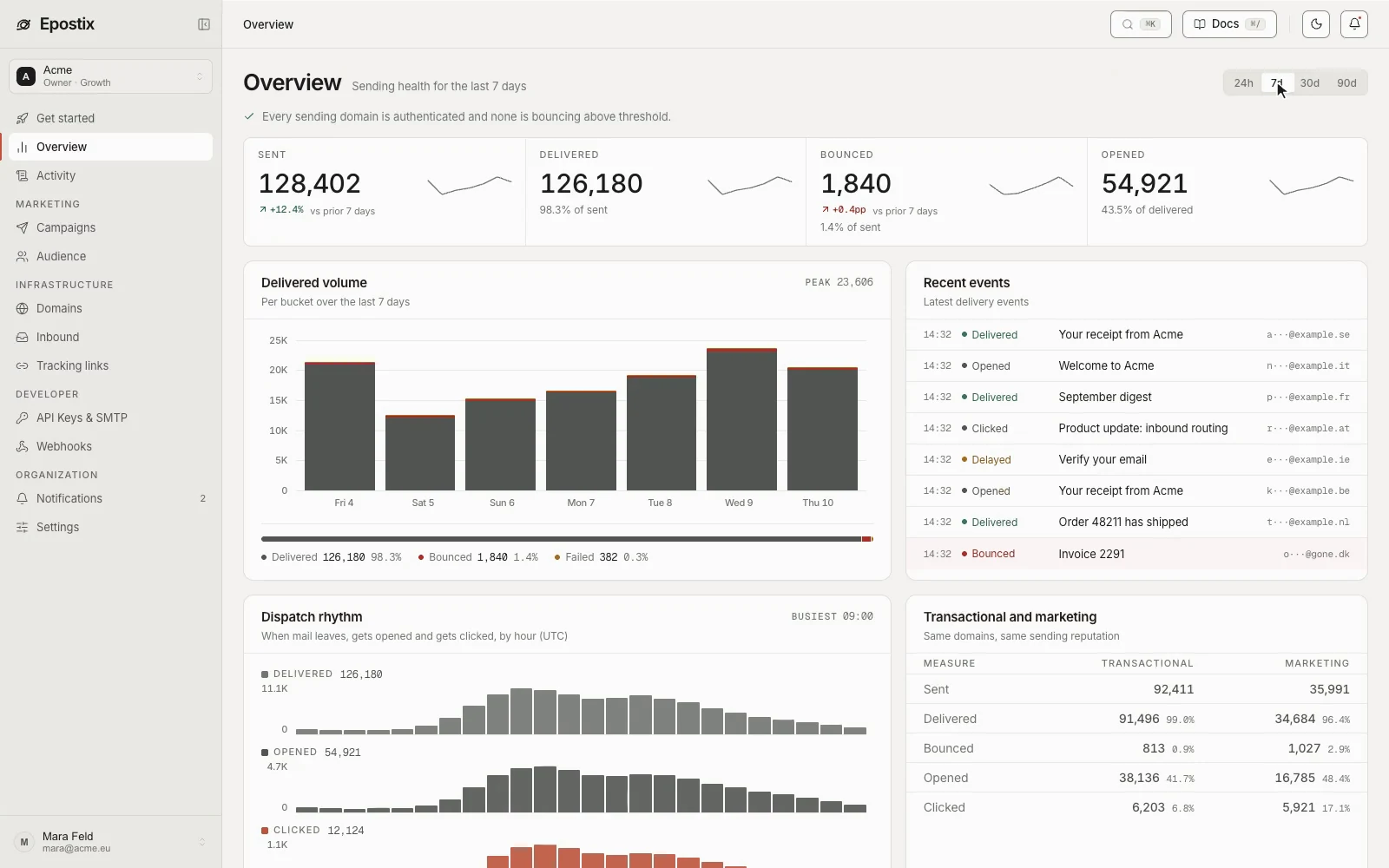
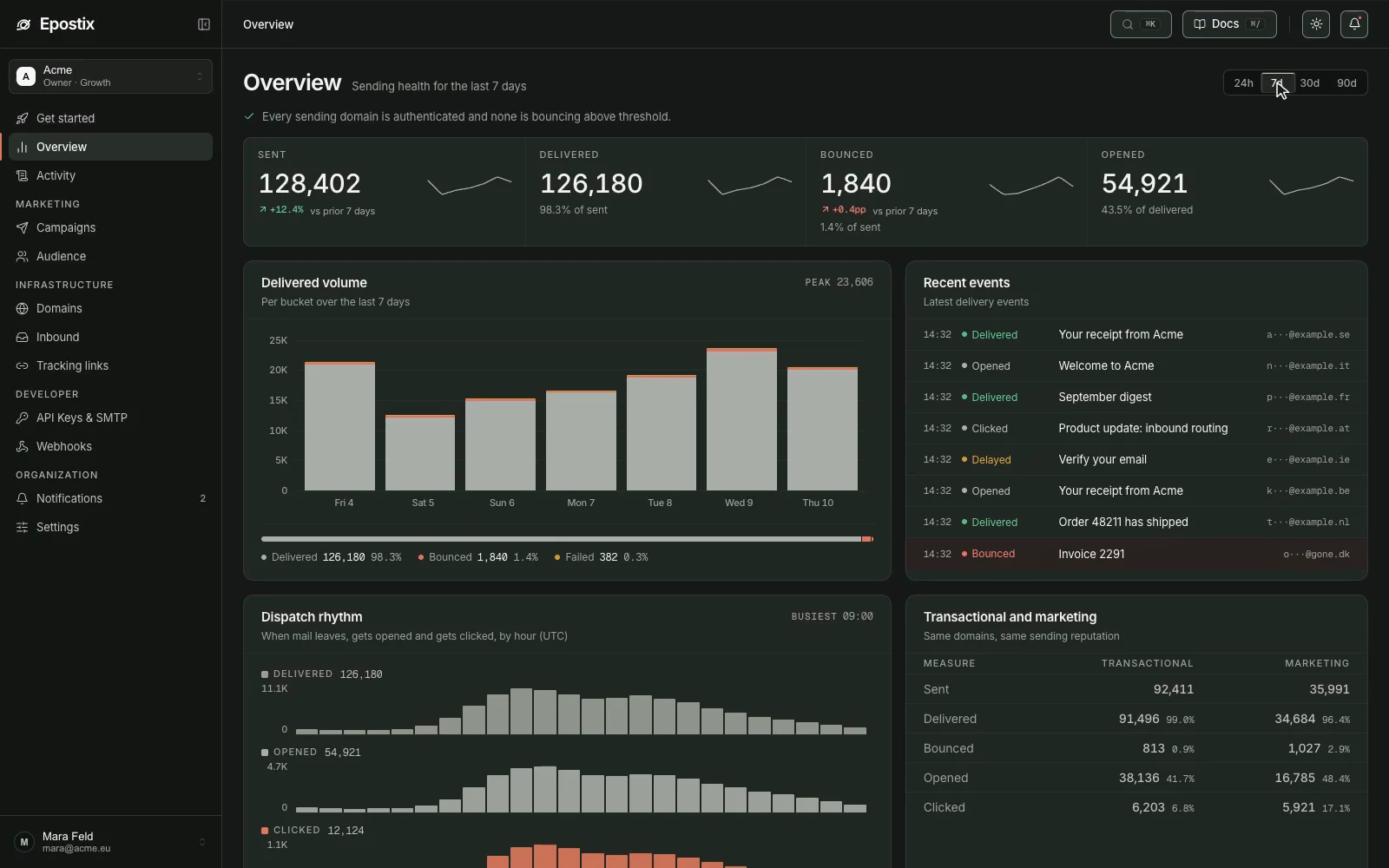
A silent walkthrough of the Overview dashboard, showing sending totals, delivery charts and recent events. The video loops silently. Use the page’s Pause motion button to pause it.
Message activity
Find a message by recipient or subject. Open its delivery trace, read the receiving server’s response and inspect the email itself.
When delivery fails, see the recorded reason and the attempts behind it.
Explore delivery events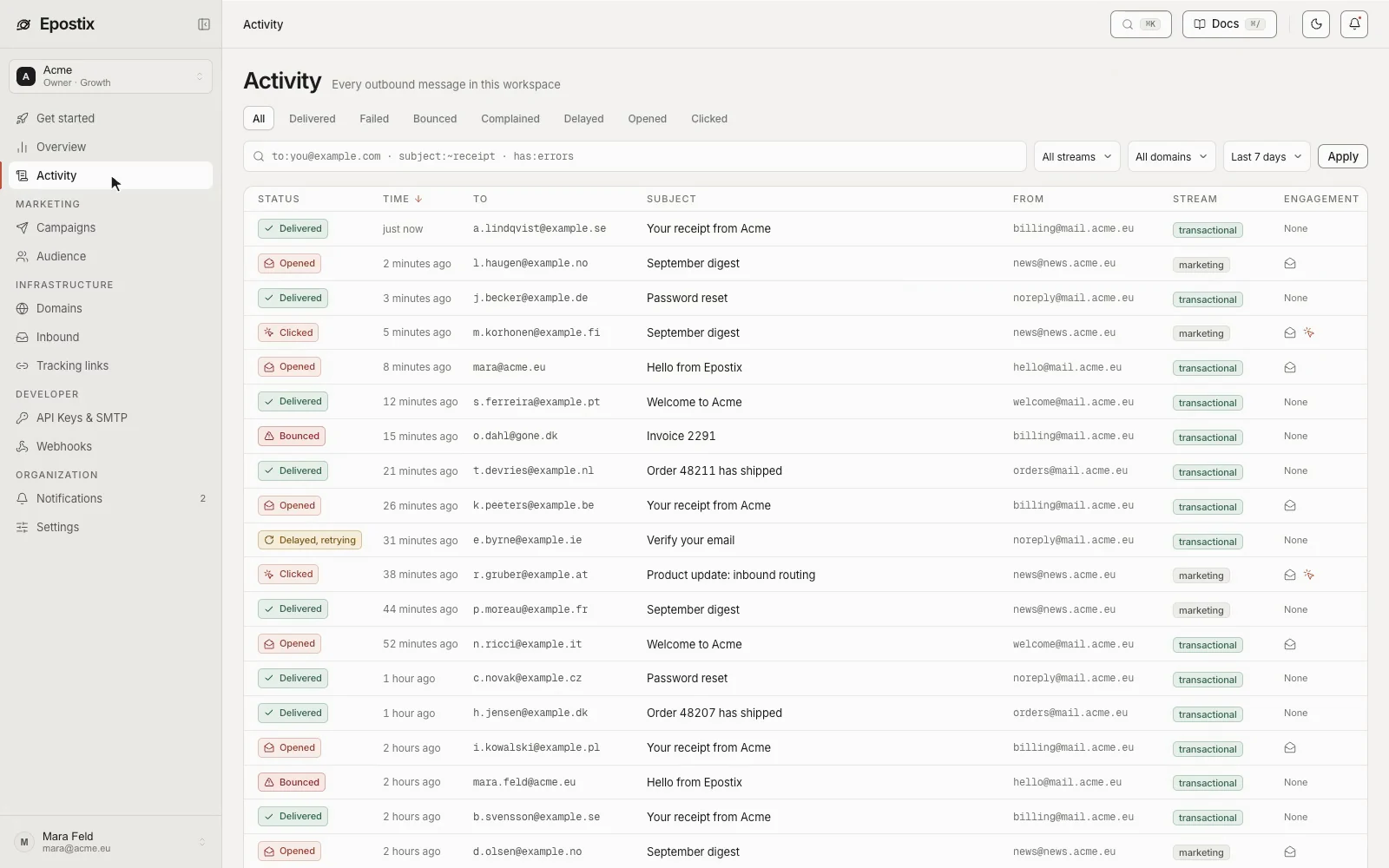
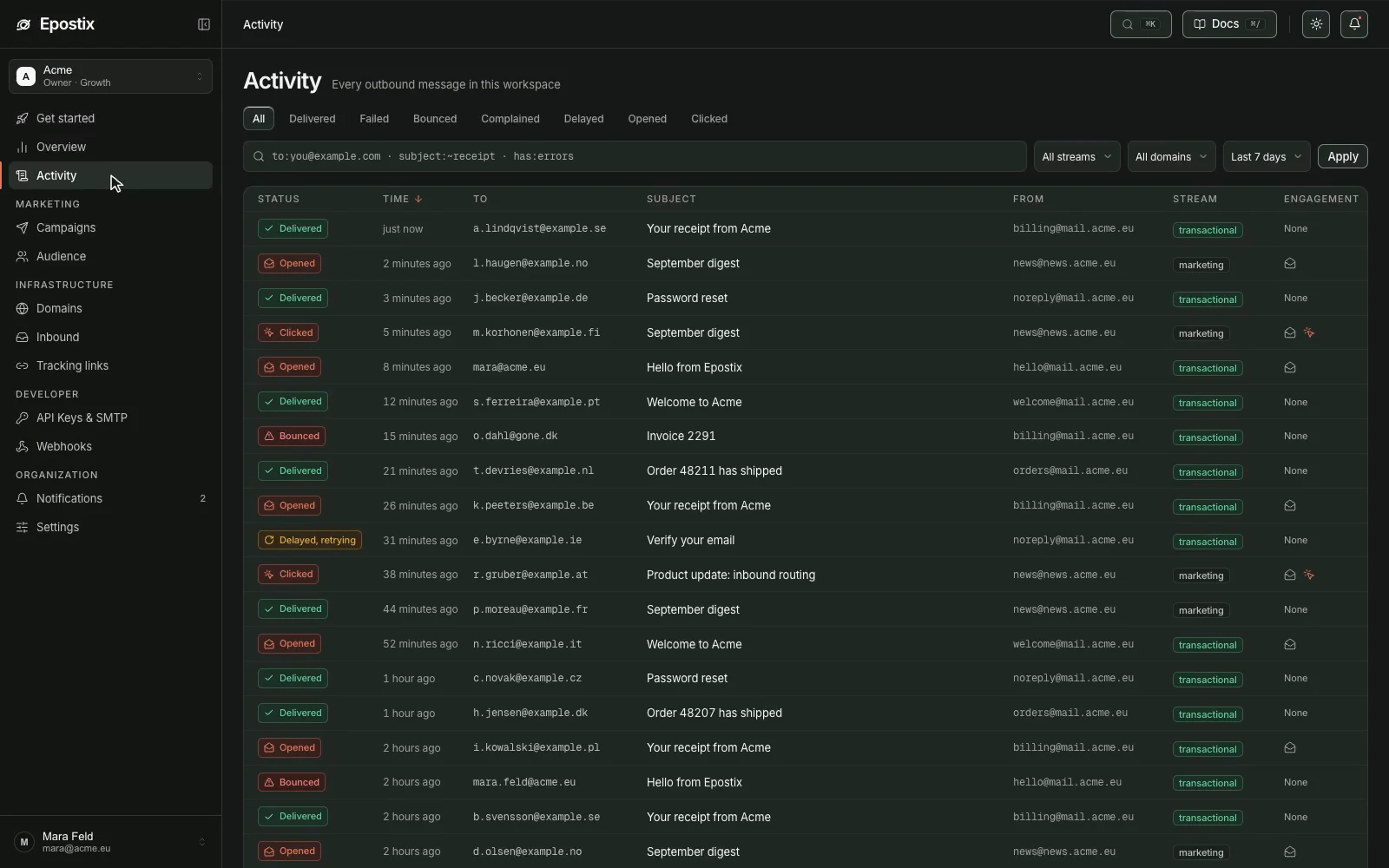
A silent walkthrough of message activity, showing how to find an email and inspect its delivery details. The video loops silently. Use the page’s Pause motion button to pause it.
Delivered means the receiving server accepted the message. It does not guarantee inbox placement.
Webhooks
Send delivery events to your own endpoint. Inspect the payload and HTTP response in the dashboard, and redeliver an event when you need to.
Connect your webhooksCampaigns & audience
Choose your audience, compose visually or bring your own HTML, and preview before scheduling. Follow delivery, opens and clicks in the campaign report.
See campaign plansSend up to 3,000 transactional emails a month, with a limit of 100 a day, on the free plan. Paid API and SMTP plans start at €9 a month. Campaign plans are available separately.
Prices exclude VAT. Paid plans bill €0.75 per 1,000 emails above the monthly limit. The free plan stops at 3,000 per month and 100 per day. Dedicated IPs are available from Growth.
Running an iGaming product? View dedicated iGaming plans.
A few details about sending, hosting and getting started.
Transactional emails are messages triggered by an action in your application: password resets, account confirmations, receipts and notifications. Epostix sends them from your domain through its REST API or SMTP relay.
Epostix stores and processes email content, recipient data, delivery logs and engagement events on EU infrastructure. Billing and website services have a separate processing scope, documented in our subprocessor list. Emails are delivered to the recipient’s mail provider, which may be outside the EU.
Read the subprocessor listYes. Create a free workspace, verify a domain and create an API key or SMTP credential. The free transactional plan includes 3,000 emails per month, with a limit of 100 per day. No credit card is required.
Follow the quickstartYes. If your application supports authenticated SMTP, configure it with smtp.epostix.com and an Epostix SMTP credential for your verified domain. Port 587 uses STARTTLS; alternative ports are documented in the SMTP guide.
Read the SMTP guideYes. The standard Epostix data processing agreement applies to every plan, including Free. You can read it before signing up.
Read the DPAYes. Epostix also provides audiences, segments, templates and campaign reporting in the same workspace. Marketing plans are priced separately by contacts stored; transactional plans are priced by emails sent. The pricing section lists both.
Compare the plansConnect your application, send your first message and follow it in the dashboard.
3,000 emails/month free · 100/day · No credit card